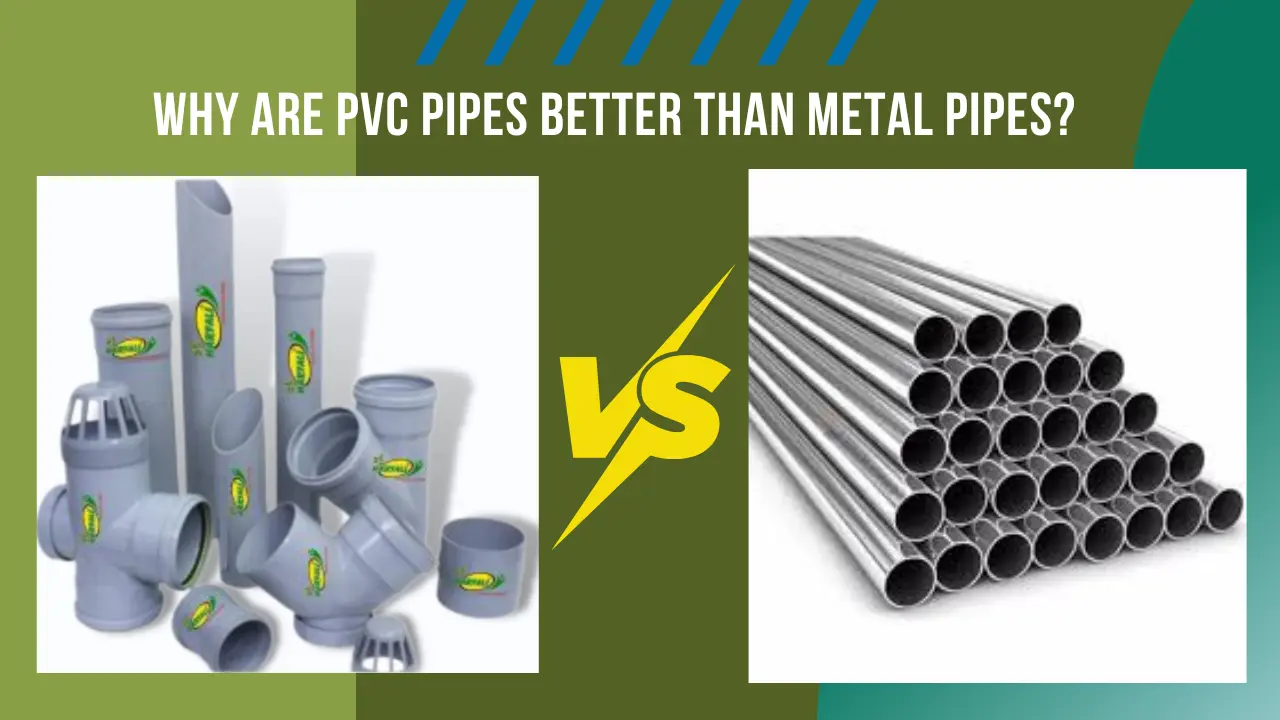
In today’s modern plumbing and construction industry, choosing the right type of pipe is very important. Pipes are used everywhere — in homes, industries, and agricultural fields. Traditionally, metal pipes were the most common option, but over the years, PVC pipes have become much more popular. The question many people ask is, “Why are PVC pipes better than metal pipes?”
At Polyshakti Pipe Industries, we believe that understanding the difference between the two helps customers make the right choice for their projects. Let’s explore why polyvinyl chloride pipes, also known as plastic PVC pipes, are considered a better and smarter option than traditional metal ones.
Also Read: PVC Pipe Dealership in India
Polyvinyl Chloride (PVC Pipes)
The full form of PVC Pipes is Polyvinyl Chloride Pipes. They are made of a plastic material which is lightweight, durable and rust-free. PVC pipes are used for water supply, drainage systems, irrigation, and industrial purposes. They are easy to install and are corrosion resistant, hence their life is longer than metal pipes. Plastic PVC pipes are affordable and their maintenance cost is also low. This is why PVC pipes are widely used in homes, buildings and agriculture projects these days.
1. Lightweight and Easy to Handle
One of the biggest advantages of PVC pipes is that they are extremely lightweight compared to metal pipes. Polyvinyl chloride pipes are made from a type of plastic, which makes them easy to carry, install, and transport.
Metal pipes, on the other hand, are heavy and require more effort to move or install. This increases labor cost and time. For plumbers and construction workers, using plastic PVC pipes means less physical strain and faster installation.
So, whether you’re working on a small home plumbing system or a large industrial project, Our pipes make the job much easier.
2. Rust and Corrosion Resistant
One major problem with metal pipes is corrosion. When metal comes in contact with water and air, it begins to rust over time. This not only weakens the pipe but also affects the quality of water passing through it.
However, do not rust or corrode because our pipes are made from polyvinyl chloride, a durable plastic material. This makes water plastic pipes perfect for long-term use in both homes and industries.
No matter how much water flows through them, PVC-pipes remain smooth, clean, and corrosion-free. This ensures that the water stays safe and uncontaminated — something that’s hard to guarantee with pvc metal or other metallic pipes.
3. Long Life and Durability
Durability is another reason why PVC pipes are better than metal ones. Polyvinyl chloride pipes can last for decades without breaking down. They can easily handle pressure, sunlight, and even chemical exposure.
Metal pipes tend to wear out or get damaged after a few years due to rust, scaling, or chemical reactions. But plastic PVC pipes maintain their strength and shape for many years.
This long lifespan makes PVC-pipes a cost-effective solution for any project, as you won’t have to replace them frequently.
4. Cost-Effective Solution
When it comes to cost, PVC pipes are much cheaper than metal pipes. From manufacturing to transportation and installation, every step is more economical with PVC.
The raw materials used in polyvinyl chloride pipes are affordable, and since these pipes are lightweight, they also save money on labor and transport.
Metal pipes, however, are expensive due to high raw material costs and heavy handling requirements. So, if you’re looking for a budget-friendly yet high-quality option, plastic PVC pipes are the clear winner.
5. Smooth Water Flow
A major advantage of using water plastic pipes is their smooth inner surface. PVC pipes have a friction-free interior, which allows water to flow easily without any blockage or buildup.
Metal pipes can develop rust, scaling, and roughness inside over time, which slows down water flow and increases maintenance needs.
Because of their smooth interior, plastic PVC pipes ensure a consistent and steady water supply — perfect for plumbing, irrigation, and industrial applications.
6. Chemical and Weather Resistant
In many industries, pipes are used to carry not just water but also chemicals. Metal pipes often react with chemicals, leading to leaks or damage.
PVC pipes, on the other hand, are highly resistant to most chemicals and environmental conditions. Whether it’s acidic water, salty water, or exposure to sunlight, polyvinyl chloride pipes remain strong and unaffected.
This makes them ideal for chemical plants, agricultural uses, and areas with varying weather conditions.
7. Easy Installation and Maintenance
Installing PVC pipes is simple. They can be easily cut, joined, and fitted using basic tools. The joints are leak-proof and strong when properly connected.
Metal pipes, however, need heavy tools, welding, or threading for installation. This increases time and labor costs.
Also, maintaining PVC pipes is much easier. Since they don’t rust or leak easily, there’s little need for frequent repairs. If a part does get damaged, replacing a section of plastic PVC pipe is much easier than replacing metal ones.
8. Safe and Hygienic for Drinking Water
Water quality is very important, especially when it comes to drinking water. Metal pipes can release small particles of rust or metal into the water, affecting its taste and safety.
PVC pipes are non-toxic and safe for drinking water. They do not react with water or release any harmful substances. Because of this, water plastic pipes made from polyvinyl chloride are widely used in residential and municipal water systems.
9. Environmentally Friendly
At first, many people think that metal is more eco-friendly than plastic, but that’s not always true. PVC pipes are recyclable and have a much longer lifespan than metal pipes, which reduces waste over time.
Since plastic PVC pipes are lightweight, they also reduce fuel consumption during transport. Additionally, producing polyvinyl chloride pipes consumes less energy compared to manufacturing metal pipes.
This makes PVC a more sustainable and environmentally responsible choice for plumbing and construction.
10. Versatile Applications
PVC-pipes are not just limited to plumbing. They are used in agriculture, construction, drainage systems, chemical industries, and even in cable protection.
Polyvinyl chloride pipes come in different sizes and thicknesses, making them suitable for various applications. They can be used as water plastic pipes in homes or as durable PVC metal alternatives in industrial settings.
11. No Scaling or Deposits
Over time, metal pipes tend to develop scaling or mineral deposits on the inner surface. This reduces the pipe’s diameter and slows down the water flow. PVC pipes, due to their smooth surface, do not allow scale or deposits to form. This means your plumbing system stays efficient for a long time with minimal maintenance.
12. Better Safety During Installation
Another important point is safety. Installing metal pipes often involves cutting, welding, or soldering, which can be dangerous without proper tools and training.
PVC-pipes, on the other hand, can be joined safely with simple adhesives or couplings. There’s no need for fire, electricity, or heavy machinery during installation, which makes them safer for workers.
Conclusion
After comparing both materials, it’s clear why PVC-pipes are better than metal pipes. From being lightweight, affordable, and rust-free to offering long life and smooth water flow, polyvinyl chloride pipes outperform metal in almost every aspect.
At Polyshakti Pipe Industries, we specialize in manufacturing high-quality plastic PVC pipes and water plastic pipes that are durable, cost-effective, and environmentally friendly. Whether you need pipes for home, agriculture, or industrial purposes, our range of PVC pipes is designed to deliver long-lasting performance and value.
So, if you’re still using metal pipes, it’s time to make the switch. Choose PVC pipes from Polyshakti Pipe Industries — the smarter, stronger, and more sustainable solution for your plumbing needs.