PVC pipes are among the most widely used plumbing materials in residential, commercial, and industrial applications. Their durability, smooth flow, cost-effectiveness, and long service life make them a preferred choice across the globe. At Polyshakti Pipe Industries, we manufacture high-quality PVC pipes designed to deliver strength, reliability, and long-lasting performance. But before choosing PVC pipes, it is important to understand what they are and what makes them so effective.
What is a PVC Pipe?
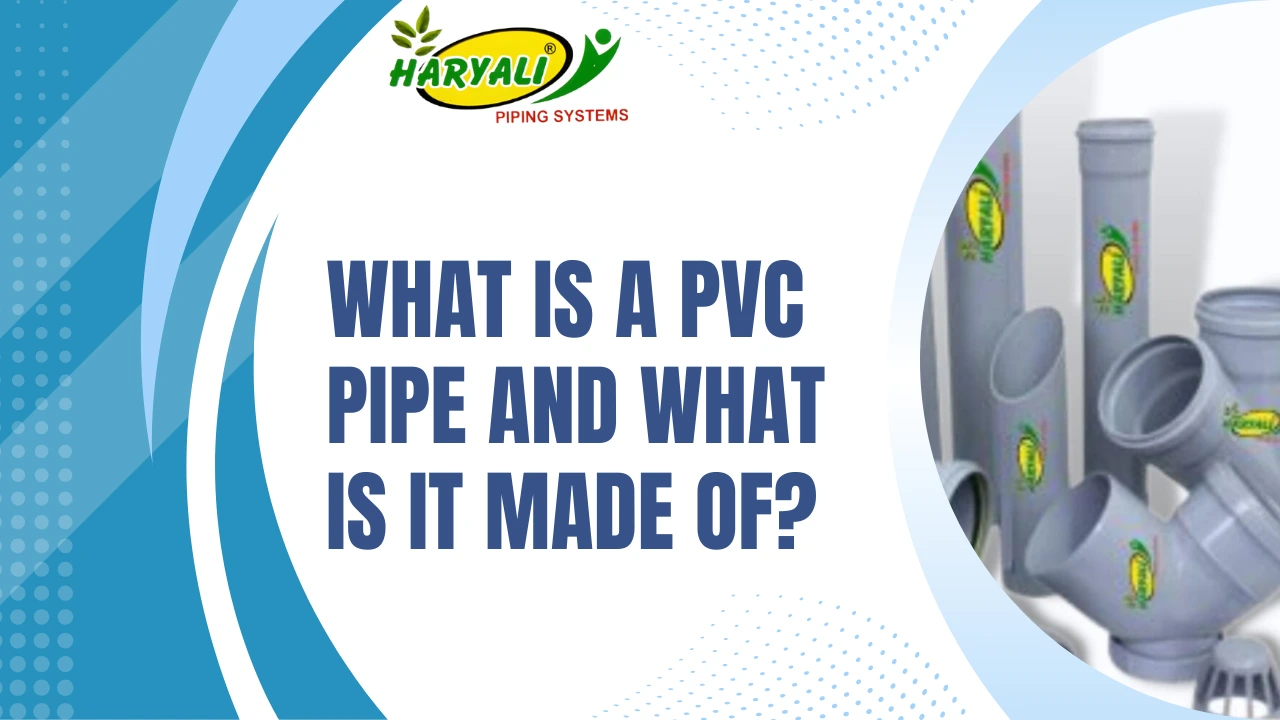
PVC pipe is a type of plastic pipe made from a polymer known as Polyvinyl Chloride. It is strong, lightweight, corrosion-resistant, and ideal for a wide range of fluid transportation applications. PVC is one of the most commonly used materials for water supply, drainage systems, agricultural irrigation, and industrial piping due to its unmatched performance and affordability.
The PVC full form is Polyvinyl Chloride, and it is one of the most versatile materials in the world. Due to its smooth inner surface and high mechanical strength, PVC pipe ensures better water flow with minimal friction loss.
Modern plumbing systems today prefer PVC plumbing materials because they are non-corrosive, chemical-resistant, leak-proof, and easy to install without heavy tools.
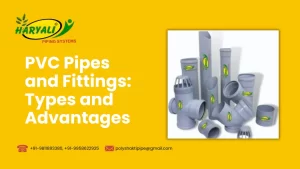
Also Read: PVC Pipes and Fittings: Types and Advantages
What are PVC Pipes Made Of?
PVC pipes are made from Polyvinyl Chloride (PVC) resin, a strong and versatile thermoplastic material widely used in plumbing and industrial applications. The manufacturing process involves mixing PVC resin with several additives that enhance durability, stability, and performance. Heat stabilizers are added to protect the pipe from high temperatures during processing and from long-term exposure to sunlight. Lubricants ensure smooth extrusion and help create a frictionless inner surface for better water flow. Pigments are used to give the pipe color and improve UV resistance. In some flexible PVC products, plasticizers may be added to increase flexibility, but rigid PVC pipes, commonly used in plumbing, do not contain plasticizers. Additional additives like impact modifiers and fillers are used to improve strength, toughness, and overall lifespan. Together, these ingredients create lightweight, corrosion-resistant, and long-lasting PVC pipes ideal for water supply, drainage, irrigation, and various industrial uses.
Advantages of PVC Pipes
PVC pipes offer several benefits, making them preferred over metal pipes or other polymer pipes. Key advantages include:
1. Corrosion and Chemical Resistance- PVC pipes do not rust, corrode, or scale. This ensures clean and safe water supply.
2. Lightweight and Easy to Install- Compared to metal pipes, PVC pipes are extremely light. This reduces labor cost and installation time significantly.
3. High Durability- PVC pipes have a long lifespan—often more than 50 years—because of their high resistance to environmental and chemical damage.
4. Leak-proof Joints- PVC plumbing materials come with strong, reliable solvent cement joints that eliminate leakage issues.
5. Cost-Effective- PVC pipes are more affordable than metal pipes and require minimal maintenance, making them cost-effective in the long run.
6. Smooth Flow- The smooth internal surface reduces friction, improving water flow efficiency.
7. Eco-Friendly- PVC pipes consume less energy during manufacturing and are recyclable.
What are the Uses of PVC Pipes?
PVC pipes are used in almost all major sectors due to their versatility and strength. Some common applications include:
1. Water Supply Systems- PVC pipes are widely used in domestic and commercial water distribution due to their safety and corrosion resistance.
2. Plumbing and Drainage- Their leak-proof joints and high flow capacity make them ideal for plumbing, drainage, and sewage systems.
3. Agriculture and Irrigation- PVC pipes are useful for irrigation networks, sprinkler systems, and groundwater supply.
4. Industrial Applications- Industries use PVC pipes for chemical transportation, ventilation lines, and waste management due to their chemical resistance.
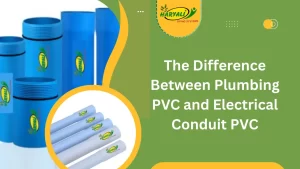
5. Electrical Conduits- PVC conduit pipes protect electrical cables from moisture, corrosion, and mechanical damage.
6. Construction- Used for structural purposes, ducting, rainwater systems, and underground piping networks.
7. Borewell and Submersible Systems- Heavy-duty PVC pipes are preferred in borewell casing due to their high pressure-bearing capacity.
FAQs
What is PVC’s Full Form?
PVC full form is Polyvinyl Chloride. Sometimes referred to as PVC full form in plastic, it represents a widely-used synthetic plastic polymer.
What is PVC Material?
PVC material is a thermoplastic made from vinyl chloride. It is strong, durable, lightweight, corrosion-resistant, and ideal for plumbing, electrical, and industrial applications.
What is the Difference Between PVC and CPVC?
PVC and CPVC look similar but have major differences:
- PVC (Polyvinyl Chloride)
- Used for cold water supply
- Cheaper than CPVC
- Suitable up to ~60°C
- Widely used in household and irrigation plumbing
- CPVC (Chlorinated Polyvinyl Chloride)
- Has extra chlorine, making it heat-resistant
- Used for both hot and cold water
- Suitable up to ~93°C
- More expensive but ideal for hot water lines, hotels, and industrial usage
In simple terms, PVC is for normal water, while CPVC is for hot water applications.
Conclusion
PVC pipes are among the most essential plumbing materials used worldwide for water supply, irrigation, drainage, and industrial applications. Their strength, lightweight nature, easy installation, and long life make them superior to many traditional materials. At Polyshakti Pipe Industries, we manufacture high-quality, durable PVC pipes designed to deliver excellent performance in every application. Whether you need PVC plumbing materials, agricultural pipes, or industrial-grade piping solutions, Polyshakti Pipe Industries ensures reliability, affordability, and world-class quality.